
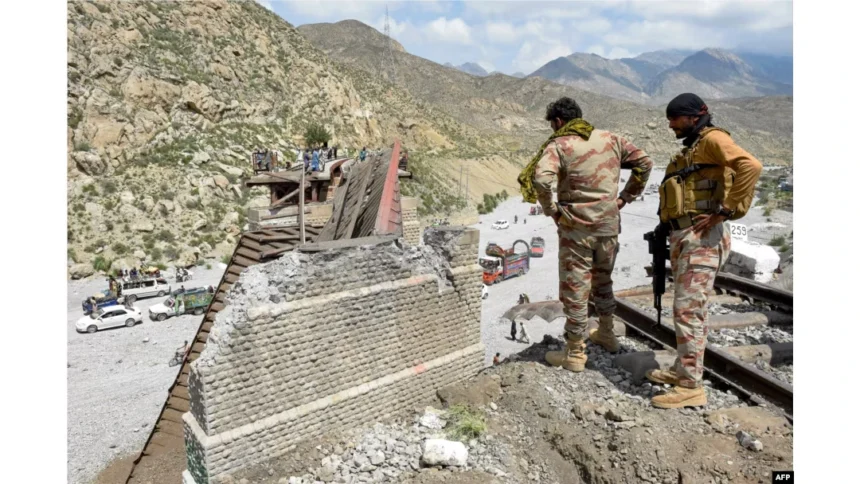
Pakistan is enduring its most violent period in over a decade, as terrorist and insurgent attacks surge across the country. According to the Islamabad-based Centre for Research and Security Studies (CRSS), more than 2,400 security personnel have been killed in the first nine months of 2025 — marking the deadliest year since 2015.
The third quarter alone saw 901 fatalities and nearly 600 injuries, a 46% increase in violence compared to the previous quarter. Fatalities have risen by 58% year-on-year. Unlike in 2024, when militant attacks dominated, over half of 2025’s deaths occurred during state-led counterterrorism operations.
Epicenters of Violence
Khyber Pakhtunkhwa (KP) and Balochistan remain the hardest-hit provinces, accounting for 71% and 25% of deaths respectively. Sindh, though less affected, witnessed a 162% surge in killings. Analysts warn that despite Pakistan’s military offensives, the insurgency continues to escalate.
Also Read – “Great Progress”: Trump, Putin to Meet in Hungary to Push Ukraine Peace Talks
The ‘Quad of Terror’
Pakistan’s internal conflict is now shaped by four key groups: Tehrik-e-Taliban Pakistan (TTP), Baloch insurgents, Islamic State Khorasan (IS-K), and Taliban factions hostile to Islamabad. After the Taliban’s return to power in Kabul in 2021, TTP militants intensified cross-border assaults from Afghan territory, particularly targeting KP.
Baloch insurgents, led by the Baloch Liberation Army (BLA), have increased attacks on Chinese interests and Pakistani security convoys, posing a major threat to the China-Pakistan Economic Corridor (CPEC).
Balochistan Under Siege
Balochistan, Pakistan’s largest and resource-rich province, has turned into a conflict zone. Districts such as Khuzdar and Zehri face constant lockdowns, and drone strikes have caused civilian deaths. Locals report arbitrary detentions, disappearances and widespread fear. Despite its mineral wealth, Balochistan continues to suffer from poverty, poor healthcare, and collapsing infrastructure.
The insurgency, rooted in decades of political neglect and military suppression, has intensified since 2021. Pakistan accuses the BLA of using Taliban-controlled Afghan territory as a sanctuary for regrouping and planning attacks — including the March 2025 Jaffar Express hijacking, allegedly orchestrated from Afghanistan.
Also Read – All Gujarat Ministers Resign as CM Bhupendra Patel Prepares for Major Cabinet Reshuffle
Border Tensions Boil Over
The Pakistan-Afghanistan border has erupted into open conflict, with Islamabad claiming to have seized 19 Afghan posts following Taliban assaults. Kabul, however, reported 58 Pakistani soldiers killed in retaliation. Both sides issued conflicting casualty reports.
Pakistan’s Interior Minister Mohsin Naqvi said the country’s forces had responded “promptly and effectively,” while Taliban spokesman Zabihullah Mujahid condemned the Pakistani strikes as “unprecedented and violent.”
Why Pakistan Is Losing Control
Experts say Pakistan’s long-standing policy of supporting militant proxies has backfired. The Taliban now use insurgencies to extract political leverage, while unregulated Afghan financial networks — bolstered by narcotics and extortion — continue to fund militants. American weapons left behind after the 2021 US withdrawal have further strengthened these groups.
Facing the TTP in KP, the BLA in Balochistan, IS-K in tribal areas and Taliban hostility across the border, Pakistan is now engaged in a multi-front war.
Regional Fallout
The instability is spreading beyond Pakistan’s borders. Earlier this year, Iran and Pakistan exchanged missile strikes in Baloch regions, and rising Taliban assertiveness risks pulling China deeper into the crisis. The Pakistani military vows retaliation against any use of Afghan territory for terrorism.
A nation that once nurtured the Taliban for strategic gain now faces the deadly consequences — battling the very forces it helped create, amid one of its bloodiest years in modern history.