
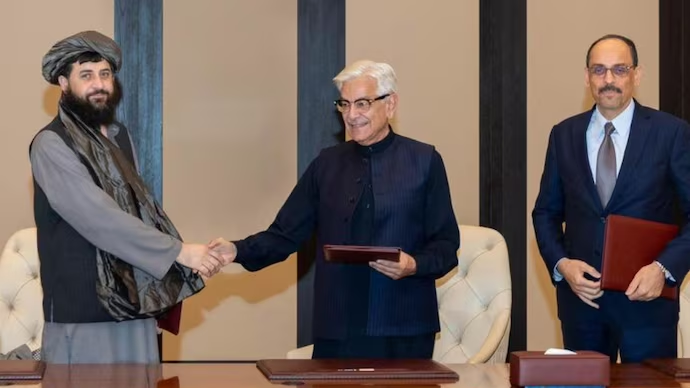
Afghanistan and Pakistan on Saturday reached an agreement for an “immediate ceasefire” during Qatar- and Turkey-mediated negotiations in Doha, following fresh Pakistani airstrikes that escalated border hostilities. Both countries committed to mechanisms aimed at ensuring lasting peace and stability and agreed to hold follow-up meetings to monitor the ceasefire’s sustainability.
The Doha talks followed a week of intense clashes along the Pakistan-Afghanistan border that left dozens dead, including three Afghan cricketers killed during Pakistani strikes in Paktika province. The Taliban accused Islamabad of breaking a prior 48-hour ceasefire, while Pakistan stated the airstrikes targeted a militant group linked to the Tehreek-e-Taliban Pakistan (TTP), responsible for attacks on paramilitary forces.
Also Read – Nepal’s Gen Z Announces Plans to Form Political Party Ahead of 2026 Elections
Taliban officials emphasized that Afghanistan is “not in favour of war,” and demanded respect for its territorial integrity. Pakistan’s Defence Minister Khawaja Asif confirmed the ceasefire and stressed that cross-border terrorism from Afghan soil would stop immediately. He announced a follow-up meeting scheduled in Istanbul on October 25 to further consolidate the agreement.
The talks were attended by Pakistan’s intelligence chief, General Asim Malik, and Afghan defence chief Mohammad Yaqoob. Despite the ceasefire agreement, tensions remain high, with both sides accusing each other of violations. Afghanistan’s cricket board also withdrew from a planned T20 tri-series with Pakistan and Sri Lanka in response to the killing of its players.
Also Read – “Every Inch of Pakistan Within BrahMos Range” Rajnath Singh Flags Off First Lucknow-Made Missiles
The Doha-mediated agreement marks a critical step towards stabilizing the Pak-Afghan border, though experts note that the implementation of mechanisms and mutual compliance will determine the long-term effectiveness of the ceasefire.