
Pakistan has approved sweeping amendments to its military laws through the Pakistan Army Act Amendments, 2025, along with parallel revisions for the navy and air force. The changes mark one of the most significant restructurings of the country’s defence leadership in recent years.
Creation of Chief of Defence Forces
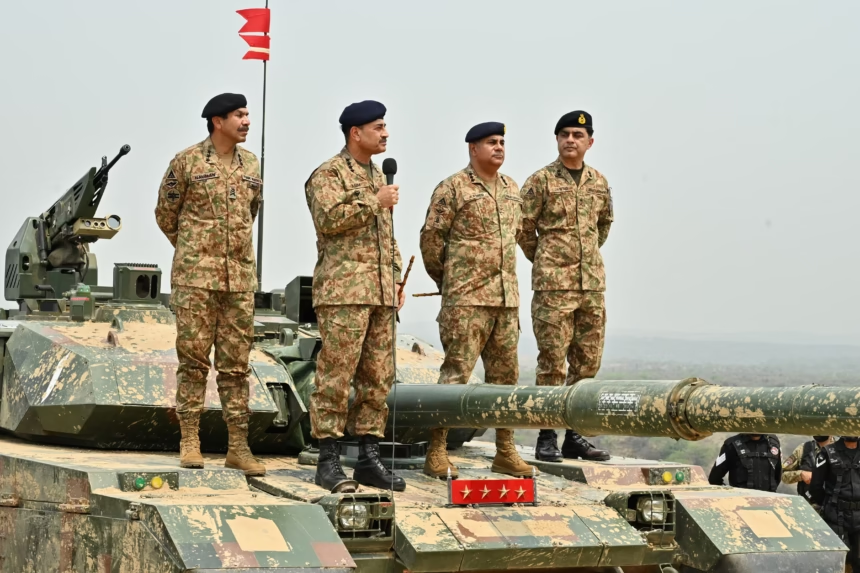
The new legislation designates the army chief as the Chief of Defence Forces (CDF), a powerful unified role overseeing the highest operational and strategic military decisions.
According to officials, the CDF will hold a five-year tenure beginning from the date of notification, likely enabling Army Chief Field Marshal Asim Munir to remain in office until November 2030.
Also Read – SC Suggests Phased Ban on Luxury Petrol, Diesel Cars, Seeks Updated EV Policy
Centralisation of Key Appointments
The amendments significantly enhance the CDF’s authority over senior military appointments:
- The Vice Chief of Army Staff (VCOAS) and Deputy Chief of Army Staff (DCOAS) will now be appointed solely on the CDF’s recommendation.
- The term “government” in relevant clauses is replaced, placing decisive control of appointments directly under the army chief.
- The position of Chairman Joint Chiefs of Staff Committee (CJCSC) will be abolished effective 27 November 2025.
Control Over Strategic Command
The CDF’s influence extends to Pakistan’s National Strategic Command (NSC):
- The Prime Minister will appoint the NSC commander for a three-year term based on recommendations from the CDF and army chief.
- The commander may be reappointed for another three-year term.
- These appointments or extensions cannot be challenged in court.
- Provisions on service tenure, retirement age, and removal under the Army Act will not apply to the NSC commander.
Also Read – Supreme Court Flags ‘Very Serious’ Air Pollution in Delhi, Advises Virtual Hearings
Expanded, Protected Mandate for the CDF
While the federal government may outline the duties of the army chief or CDF, the legislation explicitly restricts the government from limiting these duties in multi-domain operational areas.
A Shift Toward Centralised Military Authority
Collectively, the amendments consolidate unprecedented authority in the office of the Chief of Defence Forces, effectively centralising command and decision-making across Pakistan’s armed forces under a single, powerful military leadership structure.