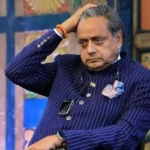

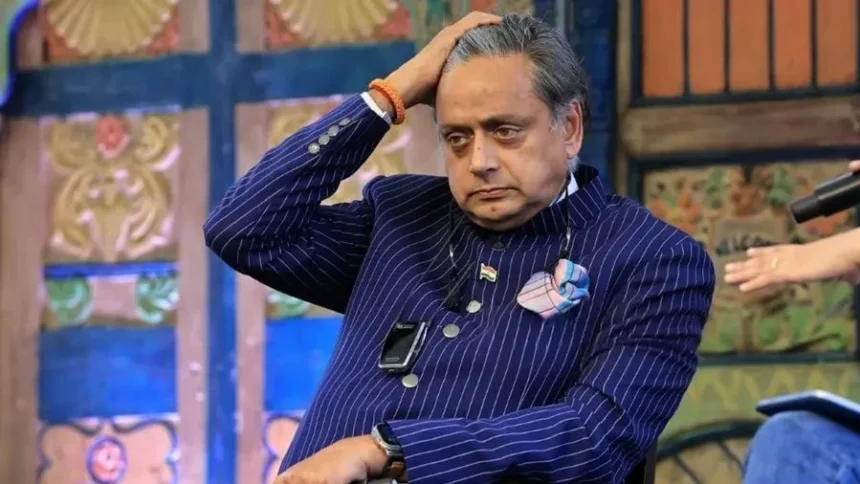
Congress MP Shashi Tharoor on Tuesday strongly opposed the government’s proposal to replace the Mahatma Gandhi National Rural Employment Guarantee Act (MGNREGA) with the Viksit Bharat Guarantee for Rozgar and Ajeevika Mission (G RAM G), calling the move “immoral”.
Speaking in the Lok Sabha, Tharoor criticised the renaming of the flagship rural employment scheme and the financial restructuring proposed under the new bill.
Concerns Over Funding Structure
Tharoor highlighted that while the new scheme promises 25 additional days of paid employment, it also shifts 40 percent of the financial burden to state governments, unlike MGNREGA, under which the Centre bears the full cost of wages for unskilled labour.
He warned that the revised funding model could place undue pressure on state finances.
Also Read – UP Minister Sanjay Nishad Sparks Outrage With Remarks Defending Nitish Kumar Over Hijab Incident
‘Do Not Sully Ram’s Name’: Tharoor
Tharoor argued that removing Mahatma Gandhi’s name from a rural employment programme undermines the philosophical link between Gandhi’s vision of self-reliant villages and the concept of Ram Rajya.
“It is immoral to remove Gandhi’s name, and equally wrong to sully Ram’s name by forcing an artificial divide,” he said, later reiterating the point in a post on X.
Opposition Demands Withdrawal of Bill
Other Congress leaders also opposed the move. Priyanka Gandhi Vadra called for the bill to be withdrawn, questioning the repeated renaming of welfare schemes and the associated costs.
She said MGNREGA had functioned successfully for nearly two decades in strengthening the rural economy and argued that the proposed legislation should be referred to a parliamentary standing committee for detailed scrutiny.
Also Read – What Is Driving Trump’s Expanded US Travel Ban Effective January 2026
Objections From States and Allies
Opposition to the bill has extended beyond Congress. Leaders from Andhra Pradesh’s ruling Telugu Desam Party (TDP)—a key BJP ally—have also raised concerns, citing the increased financial burden on states under the new funding model.