
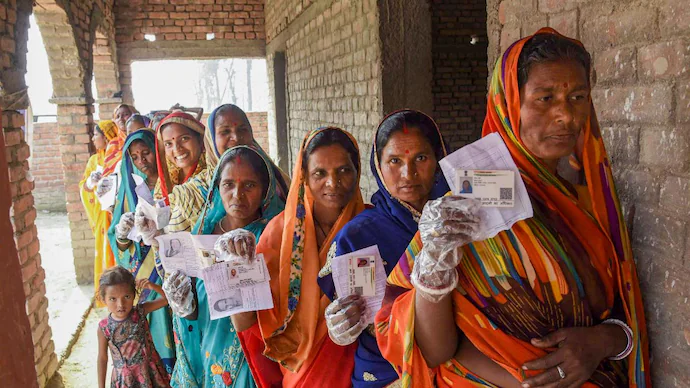
Bihar Elections 2025: Women have once again emerged as the key driving force in Bihar’s ongoing elections. According to figures released by the Election Commission of India (ECI), female voter turnout stood at 71.6%, surpassing male voter participation, which was 62.8%.
In the first phase, 69.04% of women voted, and in the second phase, the figure rose to an impressive 79.04%.
Economic Promises and Empowerment Drive Participation
Analysts attribute this surge in female participation to the extensive economic incentives promised by rival political alliances.
RJD leader Tejashwi Yadav has pledged ₹30,000 annual assistance to women and additional benefits for self-help groups under the Jeevika Didis scheme.
On the other hand, Chief Minister Nitish Kumar, supported by the BJP and leveraging the Narendra Modi factor, has focused on women-centric initiatives such as the Lakhpati Didi scheme and financial aid of up to ₹2 lakh for women entrepreneurs.
Also Read – Sitharaman Alleges Over 4,000 Bogus Voters in CM Stalin’s Kolathur Constituency
Safety and Law & Order: Key Election Concerns
Beyond financial empowerment, law and order has emerged as a crucial issue. The BJP campaigned on the argument that a return of Tejashwi Yadav could mean a revival of the “jungle raj” era.
Women voters, valuing safety and stability under Nitish Kumar’s administration, turned out in large numbers to prevent any perceived regression in public security. Mothers, in particular, expressed concerns about the safety of their daughters and their freedom to study or work.
Opposition Efforts to Regain Trust
Sensing the importance of women voters, the Mahagathbandhan alliance and Congress made targeted efforts to reach out to them. Tejashwi Yadav repeatedly assured voters of “zero tolerance for crime,” while Priyanka Gandhi Vadra campaigned during the final leg, urging women to reconsider their trust in Nitish Kumar’s government.
Also Read – BJP, TMC Clash Over Election Commission’s Revised Rules On Booth Level Agents
Women Voters Defying Tradition
Compared to 56% in 2020, female voter participation has risen sharply, signaling a significant social shift. Women in Bihar are no longer allowing male family members to dictate their electoral choices — asserting their independence and shaping the state’s political future.