
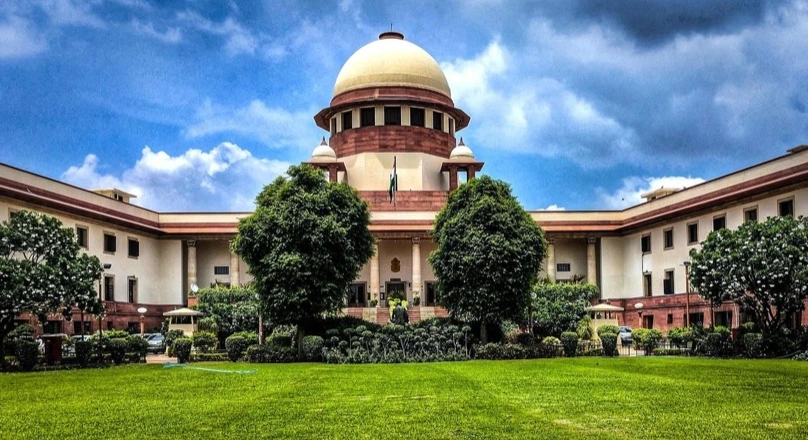
The Supreme Court has ruled that the mere fact of spouses living separately cannot lead to an automatic conclusion that their marriage has broken down irretrievably. The court stressed that a detailed examination of evidence is essential before arriving at such a finding.
Bench Warns Against Mechanical Conclusions
A bench of Justices Surya Kant and Joymalya Bagchi observed that courts frequently assume prolonged separation as proof of irretrievable breakdown. However, they underlined that courts must first determine who was responsible for the separation and whether either spouse was compelled to live apart.
Also Read – Most Indian Investors Exit SIPs Within 3 Years; Analysts Cite Emotional Decision-Making Cycle
The bench noted that concluding irretrievable breakdown “without cogent evidence of wilful desertion or refusal to cohabit” can have serious consequences, particularly for children.
SC Sets Aside Uttarakhand HC Divorce Order
The ruling came while partially allowing an appeal filed by a woman challenging the Uttarakhand High Court’s 2019 decision granting divorce to her husband on grounds of cruelty.
The couple married in 2009 and have a son born in 2010. After early marital disputes, the husband first filed a divorce petition on cruelty grounds, later withdrawing it. In 2013, he filed a second petition—this time citing desertion.
HC Failed to Address Key Questions, Says SC
The trial court had dismissed the husband’s second divorce plea, but the High Court reversed the decision. The Supreme Court, however, criticised the High Court for not addressing key issues, including:
- Whether the woman voluntarily left the matrimonial home or was forced out
- Whether the first withdrawn divorce petition barred a second petition on the same grounds
- Whether the husband committed cruelty by denying her residence, maintenance, and care for their child
Also Read – Sundar Pichai Warns of ‘Irrationality’ in AI Boom, Says No Company Is Immune to Market Risks
Matter Sent Back for Fresh Consideration
Calling the High Court’s approach incomplete, the Supreme Court remitted the case back to the High Court for reconsideration.
The parties have been directed to appear before the High Court on November 24, 2025.