
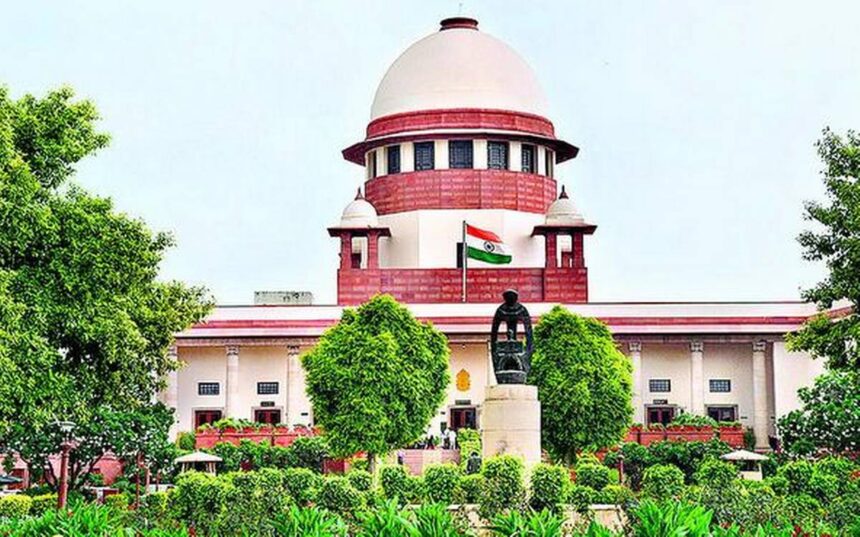
The Supreme Court on Thursday delivered its advisory opinion on a rare Presidential Reference under Article 143, holding that no constitutional authority can function in isolation and each must perform its inter-dependent role to keep the constitutional scheme operational.
‘Constitution Works Only If It Is Worked’: Supreme Court
A five-judge Constitution Bench led by Chief Justice of India BR Gavai, and comprising Justices Surya Kant, Vikram Nath, PS Narasimha, and AS Chandurkar, observed that every constitutional organ is akin to a cog in a clock that must move in tandem with others.
“They depend on each other to keep the Constitution humming… Our constitutional scheme works only if it is worked,” the bench said, stressing that deliberate inaction is inconsistent with constitutional duties.
Also Read – Delhi Suicide Bomber Umar Nabi Displayed Early Signs of Radicalisation at J&K Hospital
No Deemed Assent, No Judicially Imposed Timelines
Responding to 14 legal questions referred by the President, the Court ruled:
- Governors cannot indefinitely delay assent to state bills, as inaction may stall the legislative process.
- However, the judiciary cannot prescribe fixed timelines for granting assent, as doing so would violate the doctrine of separation of powers.
- The idea of ‘deemed assent’ was rejected, with the Court stating that automatic approval of bills undermines constitutional checks and balances.
Limited Judicial Review Allowed
While the President’s and Governor’s functions under Articles 200 and 201 cannot be challenged at the bill stage, the Court held that judicial intervention is permissible in exceptional cases to prevent constitutional paralysis.
“If prolonged inaction stalls the legislative process, courts may direct the Governor to take a decision within a reasonable timeframe,” the judgment said, without examining the merits of the bill itself.
Also Read – India Reaffirms Support for Afghanistan’s Development, Jaishankar Meets Taliban Minister Azizi
No Pre-Enactment Scrutiny
The bench clarified that courts cannot scrutinise whether a bill was correctly passed before it becomes law, reiterating that judicial review applies only after a bill becomes an Act.
The advisory opinion was issued after 10 days of hearings; judgment was reserved on September 11.