
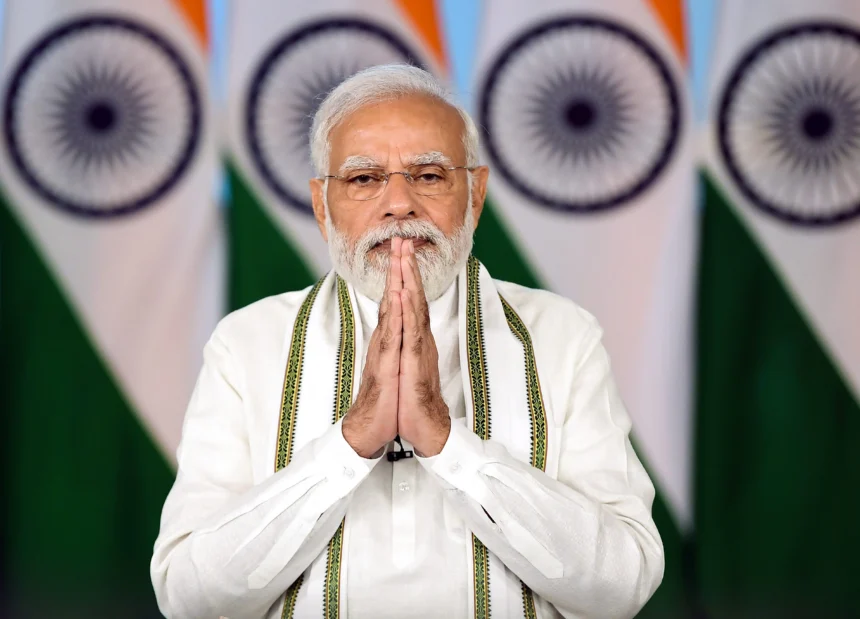
Prime Minister Narendra Modi on Sunday described the upcoming Goods and Services Tax (GST) changes as a “next-generation reform” aimed at strengthening India’s growth momentum, easing the burden on the middle class, and boosting consumption-led demand.
Addressing the nation at 5 pm, the Prime Minister called the GST cuts—effective from Monday, September 22—“a GST saving festival” that will reduce the prices of essentials, expand opportunities, and accelerate India’s economic story.
Simpler Rate Structure
The new GST system will move towards a simplified two-rate structure of 5% and 18%, replacing the existing four slabs. Items previously taxed at 12% will largely shift to the lower 5% bracket.
Finance Minister Nirmala Sitharaman had earlier announced that health and life insurance will be exempt from GST, while budget hotel rooms (up to ₹7,500 per night) and renewable energy equipment will attract only 5% tax.
Daily Essentials and Consumer Goods to Get Cheaper
Under the revised rates, a wide range of goods and services will see price cuts.
Daily essentials like soaps, toothpaste, shampoos, medicines, and dairy products will become cheaper.
Automobiles and consumer electronics such as small cars and televisions will shift to the 18% bracket from 28%.
Hospitality and travel will benefit as mid-range hotel stays become more affordable.
The government expects households to feel immediate relief in their monthly expenses, especially during the festive season.
“GST Bachat Utsav” to Encourage Savings
PM Modi framed the reform as a “GST Bachat Utsav”, or festival of savings, designed to increase disposable income and spur domestic demand.
“This reform is not only about reducing prices but about creating new opportunities. The savings of our middle class will increase, our youth will benefit, and the entire economy will gain momentum,” Modi said.
Economic Impact and Revenue Concerns
The Centre estimates that the combined impact of GST cuts and earlier income tax relief could generate savings of ₹2.5 lakh crore for households. Officials hope the consumption boost will offset the expected ₹48,000 crore loss in tax revenue from the reforms.
Experts say the new framework could ease inflationary pressures, simplify compliance for businesses—particularly MSMEs—and attract higher investment. However, the actual benefit for consumers will depend on whether businesses pass on the full tax savings.
Equal Role for States
Emphasising cooperative federalism, the Prime Minister underlined that every state will be “an equal partner in India’s development journey” under the new GST regime. He reiterated that rising purchasing power will benefit agriculture, industry, and services alike, laying the foundation for a more self-reliant India.