
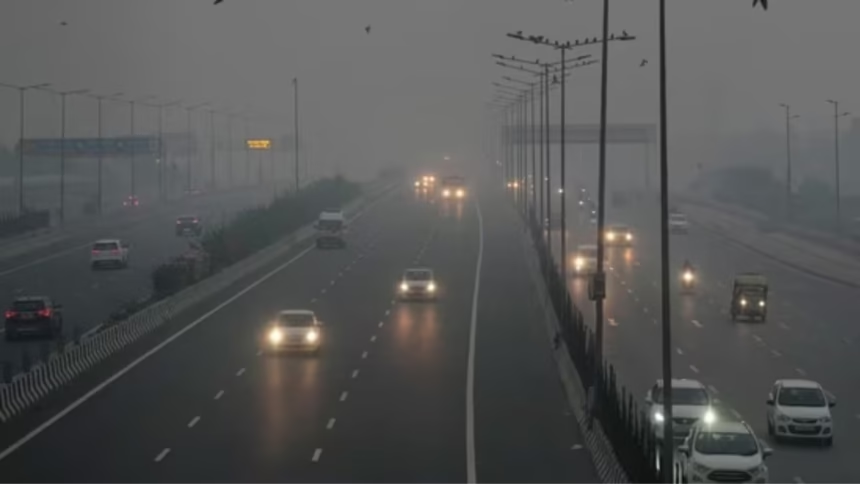
Delhi-NCR’s air quality deteriorated sharply on Tuesday, slipping into the ‘severe’ category, prompting the Central pollution authority to invoke Stage III restrictions under the Graded Response Action Plan (GRAP).
According to the Commission for Air Quality Management (CAQM), Delhi’s average Air Quality Index (AQI) climbed from 362 on Monday to 425 on Tuesday morning, driven by stagnant winds, a stable atmosphere, and weather conditions that trapped pollutants close to the surface.
Also Read – Pakistan Passes 27th Constitutional Amendment, Cementing Field Marshal Asim Munir’s Control
What Stage III Restrictions Mean
Under Stage III of GRAP, the following measures have been implemented in addition to those already in force under Stages I and II:
- Ban on non-essential construction and demolition activities, including earth excavation, piling, laying sewer lines, and operation of Ready-Mix Concrete (RMC) batching plants.
- Closure of stone crushers and mining operations across Delhi-NCR.
- Restriction on BS-III petrol and BS-IV diesel four-wheelers in Delhi and adjoining NCR districts, with exemptions for vehicles used by persons with disabilities.
- Switch to hybrid or online classes for students up to Class 5.
- Advisory for private companies to adopt work-from-home or hybrid modes to reduce vehicular emissions.
- Ban on inter-state diesel buses entering or operating within Delhi.
- Prohibition on diesel generator sets, except those used for emergency or essential services.
Also Read – PM Modi Offers Condolences Over Red Fort Blast, Reviews Situation With Home Minister Amit Shah
Background
During winter months, Delhi-NCR enforces GRAP restrictions based on AQI levels—
- Stage I: Poor (201–300)
- Stage II: Very Poor (301–400)
- Stage III: Severe (401–450)
- Stage IV: Severe Plus (above 450)
Experts attribute the worsening pollution to vehicular emissions, stubble burning, industrial activity, and unfavourable weather, all of which contribute to Delhi’s recurring winter smog crisis.