
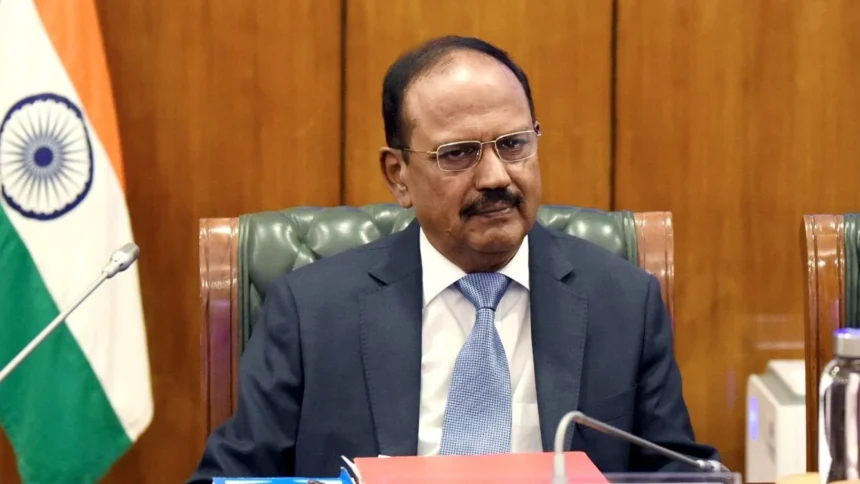
On the occasion of National Unity Day, National Security Advisor (NSA) Ajit Doval on Friday emphasized that effective governance is the foundation of a nation’s stability and strength, asserting that recent regime changes in neighbouring countries such as Bangladesh, Nepal, and Sri Lanka were primarily the result of bad governance.
‘Governance Determines Rise and Fall of Nations’
Delivering the Sardar Patel Memorial Lecture on Governance, Doval said that throughout history, the rise and fall of empires and democracies alike have been determined by the quality of their governance.
“In the recent cases of regime change through non-constitutional methods in Bangladesh, Sri Lanka, Nepal, and others, these were actually cases of poor governance. And that is how governance matters,” Doval remarked.
Also Read – Zohran Mamdani Seen Urging End To ‘Israeli Violence’ Months Before Hamas’ October 7 Attack
‘Good Governance Crucial for Nation-Building’
Doval highlighted that governance is central to national security and development, stating,
“I believe governance plays a seminal role in the nation-building process, as well as in securing a nation and helping it achieve its goals and aspirations.”
He added that India is undergoing an ‘orbital shift’ in its governance and global standing, which requires clarity of vision and steadfast leadership.
“Whenever change comes, the most important thing is clarity of vision. You must not be subdued by adversities or threats,” he said.
Also Read – Afghanistan, Pakistan Resume Peace Talks in Turkey After ‘Obliterate Taliban’ Threat from Islamabad
‘Reinventing Sardar Patel’s Vision for Modern India’
Calling Sardar Vallabhbhai Patel’s leadership timeless, Doval said Patel’s vision is needed today “more than ever before.”
He underlined Patel’s role in converting India’s civilisational unity into a modern nation-state and said this was achievable only through a highly effective governance mechanism.
“Converting the civilisation into a nation-state is a stupendous task. The government has got to think and do beyond what is normally expected,” he concluded.