
Simplified Tax Structure to Ease Business and Lower Prices
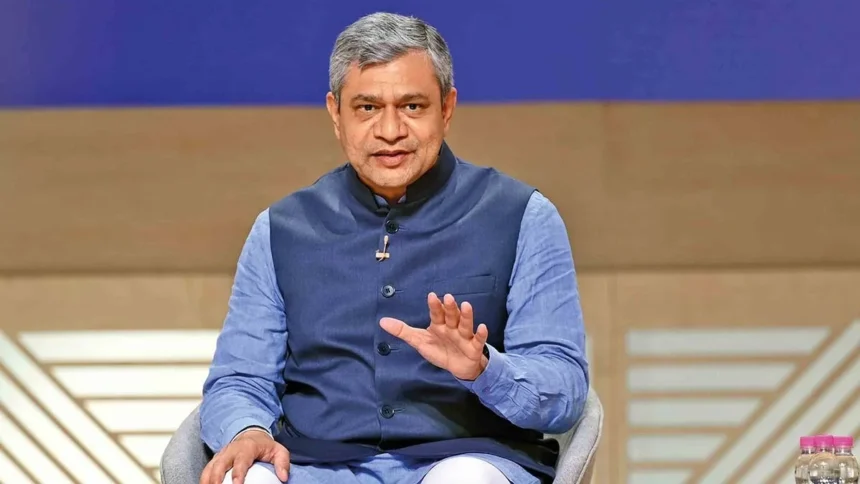
Union Electronics and IT Minister Ashwini Vaishnaw on Monday said that the recent Goods and Services Tax (GST) reform will significantly enhance ease of doing business and fuel consumer demand, potentially adding ₹20 lakh crore to India’s GDP.
The minister said the reform has been widely welcomed across the country, as it allows people to save more of their income while making everyday necessities more affordable.
Comparison with UPA Era
Taking aim at the opposition, Vaishnaw remarked that under the UPA government, there was “only talk and no action,” whereas the NDA administration has delivered “tangible relief” through GST reforms.
Examples of Reduced Tax Rates
The minister highlighted several key reductions in GST rates:
- Cement: cut from 30% to 18%
- Sanitary pads: 13% to 0%
- Footwear: 18% to 5%
- Refrigerators: reduced to 18%
- Detergents: exempted from GST
In total, taxes on nearly 370 items, including daily essentials and life-saving medicines, have been reduced. Goods previously taxed at 5%, 12%, or 18% are now tax-free under the new structure.
Revised GST Slabs
The GST framework has been simplified, reducing four slabs (5%, 12%, 18%, and 28%) to just two rates — 5% and 18%. A special 40% rate will continue to apply to luxury and sin goods.
Impact on Economy
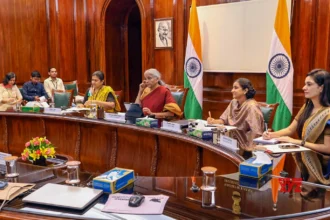
Finance Minister Nirmala Sitharaman earlier stated that the reform is expected to inject an additional ₹2 lakh crore into the economy by increasing disposable income for consumers.
Union Minister Ramdas Athawale also praised the reform, saying:
“I believe that Prime Minister Narendra Modi has taken several good decisions in his 11 years, but this decision to reduce GST will take the country’s economy to new heights. This will be very beneficial for the common man.”
He further emphasised the Prime Minister’s appeal to promote local businesses as part of the reform’s long-term vision.