
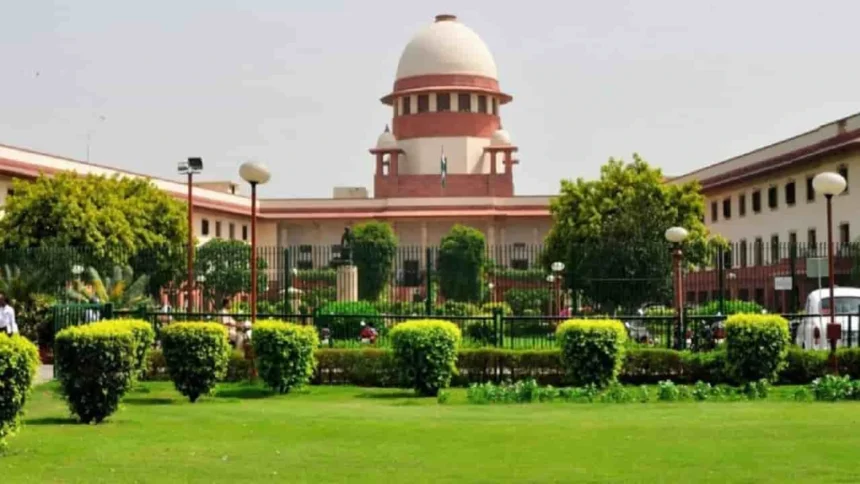
The Supreme Court on Friday agreed to hear a set of petitions challenging the Election Commission of India’s (ECI) decision to conduct a Special Intensive Revision (SIR) of electoral rolls across multiple states. The top court scheduled the hearing for Monday, November 11, marking a crucial step in a case that could shape the framework of India’s electoral process.
Petitions Allege Risk of Mass Disenfranchisement
The petitions, led by the Association for Democratic Reforms (ADR) and joined by several political parties, argue that the large-scale revision exercise could arbitrarily disenfranchise millions of genuine voters, violating their constitutional rights and threatening the integrity of free and fair elections.
Also Read – Rajnath Singh Confident of NDA Victory in Bihar, Dismisses Prashant Kishor’s Impact
The initial plea targeted the SIR exercise in Bihar, conducted just before the ongoing assembly polls. However, the issue gained national significance after the ECI announced the second phase of SIR, extending it to 12 more states and Union Territories, including West Bengal, Kerala, Tamil Nadu, and Uttar Pradesh.
‘Goes to the Root of Democracy’: Bhushan Urges Urgent Hearing
Appearing for ADR, Advocate Prashant Bhushan pressed for urgent judicial intervention, saying the matter “goes to the root of our democracy.”
He raised two key concerns before the bench:
- Arbitrary Exclusions: Petitioners alleged massive deletions from voter rolls—nearly 47 lakh names removed in Bihar—without following due process, making the exercise unconstitutional.
- Aadhaar Issue: Bhushan argued that the ECI’s refusal to accept Aadhaar as an identity document contradicts the Supreme Court’s earlier ruling, which listed it among 12 permissible IDs for voter registration.
DMK Moves Supreme Court Against SIR in Tamil Nadu
The Dravida Munnetra Kazhagam (DMK) also approached the Supreme Court seeking a stay on the SIR in Tamil Nadu, calling it a case of “constitutional overreach.”
The party said the SIR was being implemented soon after a summary revision had already concluded, effectively amounting to a “de facto National Register of Citizens (NRC)” in violation of legal norms.
ECI Defends Exercise as ‘Roll Purification’
The Election Commission of India defended the SIR, asserting that it is a transparency measure designed to remove duplicate, deceased, and ineligible voters from the rolls. Officials said the goal was to “purify electoral lists” and prevent manipulation ahead of upcoming elections.
Also Read – CM Rekha Gupta Orders Strict Action Against Polluters as BJP, Rahul Gandhi Clash Over Delhi’s Worsening AQI
Key Hearing on November 11
The Supreme Court’s November 11 hearing is expected to determine whether the SIR process meets constitutional safeguards ensuring that every eligible citizen’s right to vote remains protected.