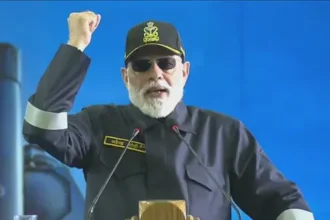

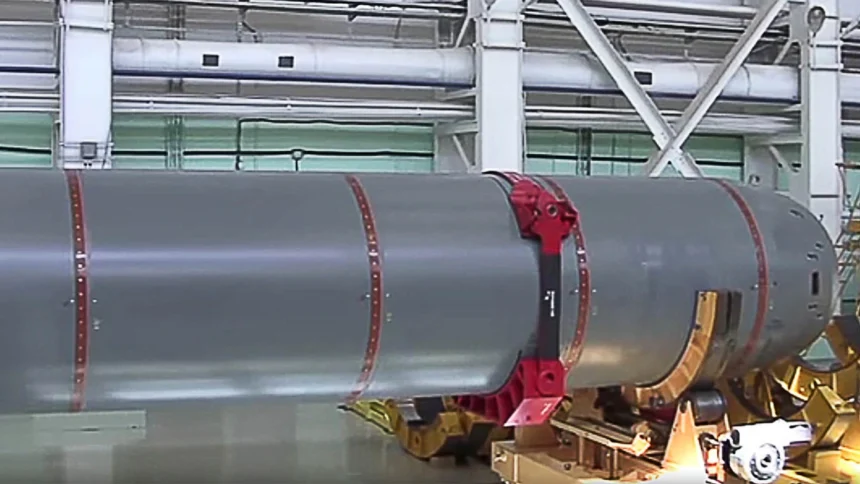
Russian President Vladimir Putin has confirmed the successful test of Russia’s Poseidon nuclear-powered autonomous torpedo, calling it a “huge success” and a milestone in the country’s defence technology. He made the announcement during a hospital visit in Moscow while meeting Russian soldiers wounded in the Ukraine war.
Putin stated that the test, conducted on Tuesday, marked the first time Russia had successfully launched the torpedo from a submarine and activated its onboard nuclear power unit. “There is nothing like this,” he declared, emphasising that Poseidon’s destructive capability “significantly exceeds” that of Russia’s Sarmat intercontinental ballistic missile (ICBM), known by NATO as SS-X-29 or Satan II.
Also Read- Sugar Rush Before Poll Crush? UP Govt Announces Rs 30 Per Quintal Hike in Sugarcane Prices
“This is a huge success. Poseidon’s power far surpasses even our most promising Sarmat missile,” Putin said.
Part of Russia’s Expanding Nuclear Arsenal
The test comes shortly after Moscow’s announcement of a successful Burevestnik missile test—a nuclear-powered, nuclear-capable cruise missile said to evade all missile defence systems.
Putin first unveiled Poseidon and Burevestnik in 2018, describing them as responses to the U.S. withdrawal from the 1972 Anti-Ballistic Missile Treaty and NATO’s continued eastward expansion.
What Is Poseidon?
The Poseidon, also known by its development name Status-6 and NATO code name Kanyon, is a nuclear-powered, nuclear-capable unmanned underwater vehicle (UUV). Often referred to as a “super-torpedo,” it is designed to travel thousands of kilometres at extreme depths, making it nearly impossible to intercept.
Also Read – India Rejects UN Report Linking Myanmar Crisis to Pahalgam Attack, Calls It ‘Baseless and Biased’
Reports suggest that Poseidon can carry a massive nuclear warhead capable of generating radioactive tsunamis that could devastate coastal regions. It is launched from specialised submarines such as the K-329 Belgorod, powered by a compact nuclear reactor that provides virtually unlimited range.
Strategic Significance
Military analysts describe Poseidon as a key element of Russia’s evolving nuclear deterrence strategy, ensuring a credible retaliatory strike capability even if traditional missile systems are neutralised.