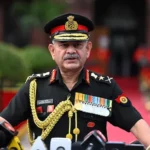

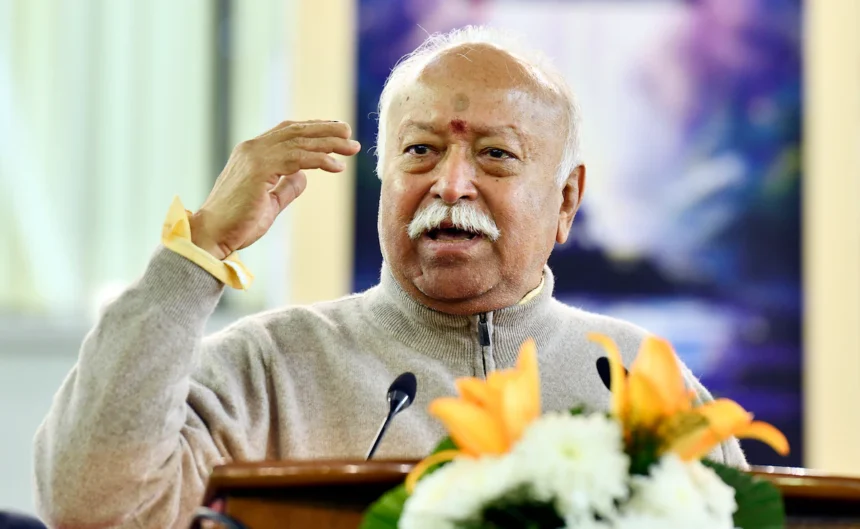
Rashtriya Swayamsevak Sangh (RSS) chief Mohan Bhagwat on Sunday described Pakistan-occupied Kashmir (PoK) as an “occupied room” in India’s home that must be reclaimed. Speaking at an event in Satna, Madhya Pradesh, Bhagwat used a domestic metaphor to stress the vision of an undivided India.
“The entirety of India constitutes a single household, yet one chamber of our dwelling, where our belongings and personal effects were kept, has been seized by strangers who now occupy it. That space must eventually be retrieved,” Bhagwat said, implicitly referring to PoK.
Addressing the Sindhi community, many of whom migrated to India during the 1947 partition, he emphasized that despite relocation, the homeland remains one and inseparable.
Bhagwat’s remarks echo statements by Defence Minister Rajnath Singh, who recently said PoK would naturally return to Indian sovereignty, pointing to growing unrest and demands for freedom from Pakistani administration.
Rising Unrest in PoK
Over the past three days, clashes between protesters and Pakistani forces in PoK have left at least 10 dead and over 100 injured in areas like Dhirkot, Muzaffarabad, Dadyal, and Chamyati. Protests organised by groups such as the Awami Action Committee reflect growing public dissatisfaction, with demands for economic relief, political reforms, and independence from Pakistani control.
Historical Context
For decades, separatist leaders with ties to Pakistan—like Syed Ali Shah Geelani, Shabir Shah, Yasin Malik, and Abdul Gani Bhat—propagated anti-India narratives, advocating “azadi” while pursuing a vision of an Islamic Kashmir aligned with Pakistan. Their agenda included displacing Hindu families and undermining Indian sovereignty.
Following Article 370’s revocation in 2019, Jammu and Kashmir has been fully integrated into India, dismantling the special provisions that separatists exploited. The current unrest in PoK exposes Pakistan’s long-standing narrative as false and highlights selective criticism by international groups ignoring human rights abuses under Pakistani control.